Seraph
A decentralized bioproduction platform combining AI, robotics, and synthetic biology to produce pharmaceutical proteins, nutrition, bioplastics, and biofuels.
About the company
SERAPH is a next-generation, decentralized bioproduction platform designed to revolutionize how the world produces pharmaceutical proteins, nutritional protein, bioplastics, and biofuels. By integrating advanced robotics, artificial intelligence, synthetic biology, and sustainable engineering, SERAPH delivers pharmaceutical-grade biological manufacturing at unprecedented efficiency, scalability, and sustainability.
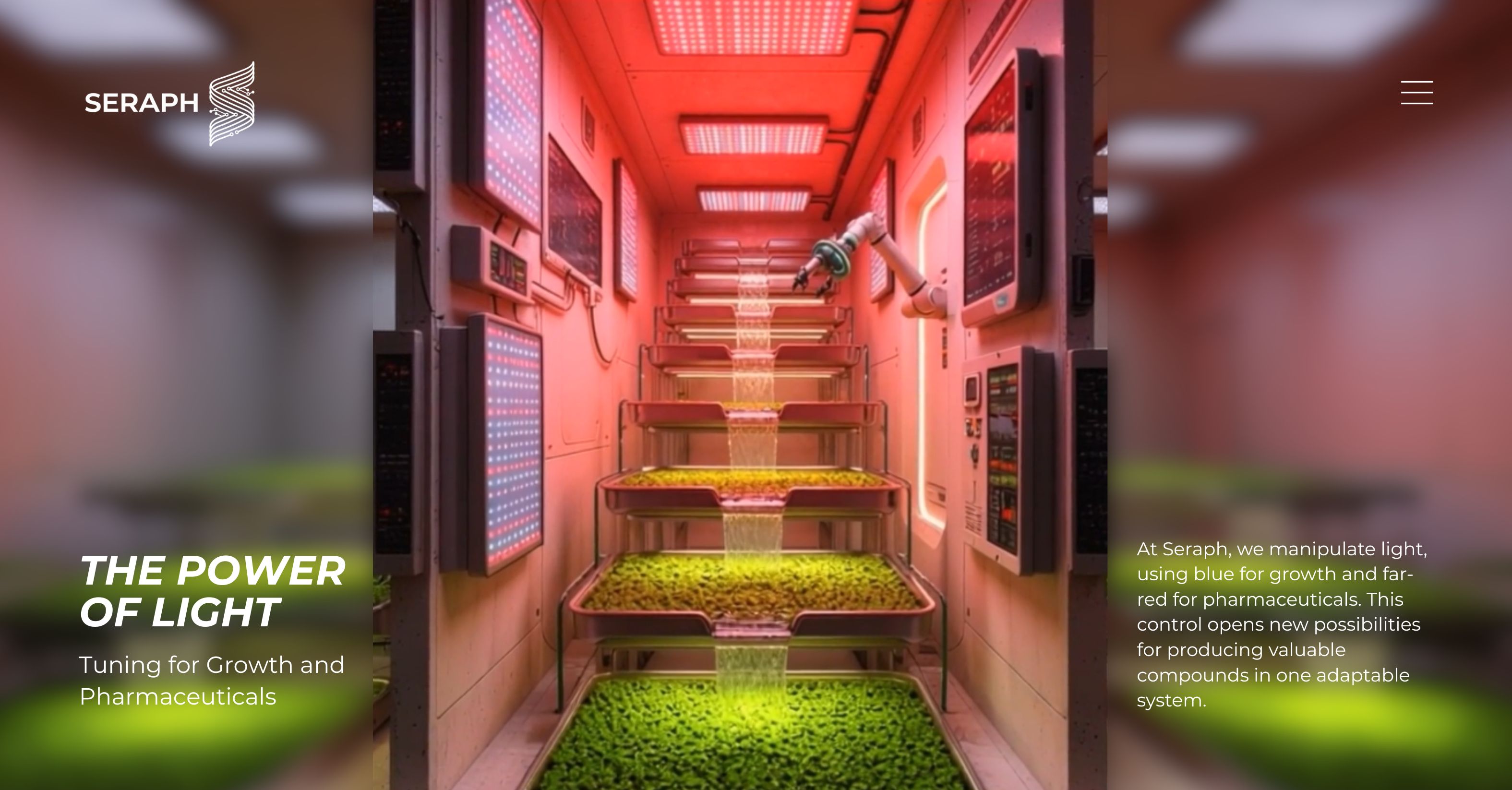
At the core of the project is the SERAPH/Helio-Weir system—a fully autonomous, containerized production unit housed within a standard 40-foot shipping container. The system uses a vertically stacked, 50-tier cultivation architecture based on Lemna minor (duckweed), a fast-growing, protein-rich aquatic plant recognized as safe for food and pharmaceutical use. Biomass flows gently through a laminar cascade (the Helio-Weir), maximizing growth while minimizing mechanical stress, energy use, and contamination risk.
SERAPH employs precision robotics to continuously monitor and maintain biological integrity. A robotic arm equipped with multimodal sensors and AI-driven anomaly detection identifies and removes contamination at sub-millimeter precision without damaging healthy biomass. This enables pesticide-free operation and pharmaceutical-grade purity. A decentralized AI System Control Center orchestrates lighting, nutrients, water chemistry, and robotics in real time, supported by a digital twin that simulates and optimizes system behavior before changes are deployed.
The platform is designed from first principles for sustainability and resilience. It operates with up to 95% less energy, 99% less land, and dramatically reduced water consumption compared to conventional bioreactors and industrial agriculture. Waste heat is recycled, water is regenerated through closed-loop distillation, and the system can operate autonomously in both developed and resource-constrained environments.